Desktop APP. Website Design.

For

AI Content Generating Startup - Stori AI

Team

Mary Austin, Nana Giglemiani-Product Designer

Industry

Artificial Intelligence/Marketing

Services

Desktop APP UX/UI,

Website Design

About Company

What?

Easily generate engaging social media content for various channels with our web application. From captivating visuals to compelling copy, our platform simplifies the process of creating and publishing posts. With just one click, effortlessly share your content across multiple channels, expanding your reach and maximizing your online presence.

How?

Engage in a conversation with our AI Chat to effortlessly generate desirable content. Link your social media accounts and let us connect you with your target audience.

Why?

Save time and resources by harnessing the power of AI to bridge the gap in your marketing and design knowledge.

I was responsible for:

Website Deliverables

Landing Page
About Page
Pricing Page

Desktop App Deliverables

Content Creating
Analytics
Linked Channels
Personal Information
My Brand
All Creation
Home
Onboarding
Navigation bar

Personas

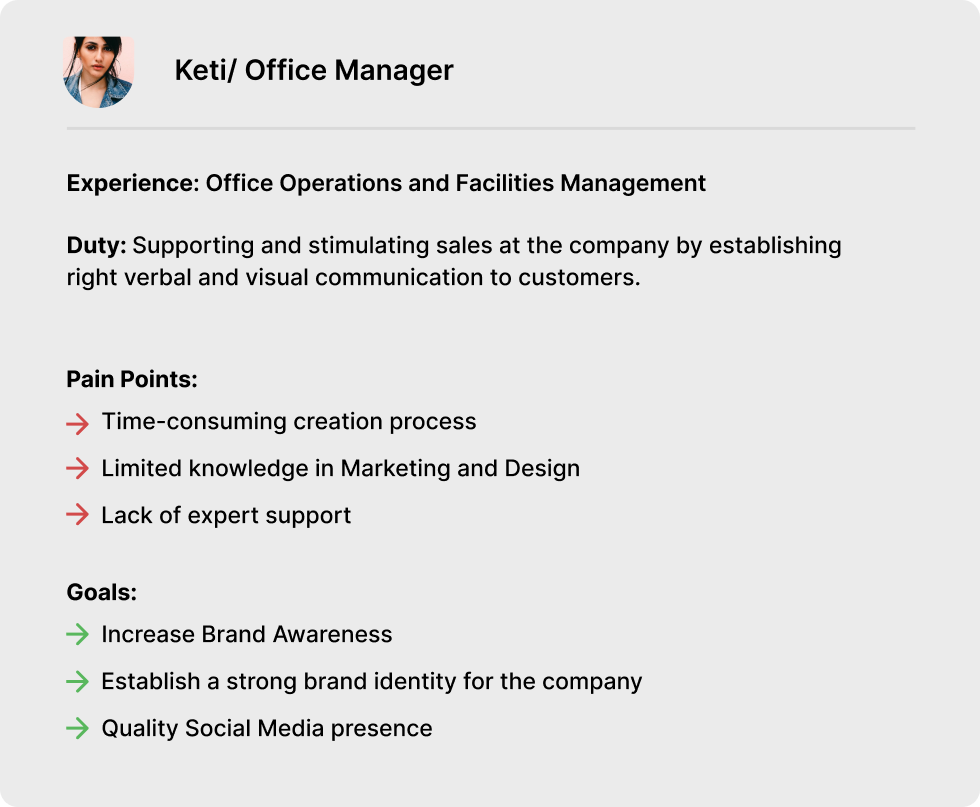
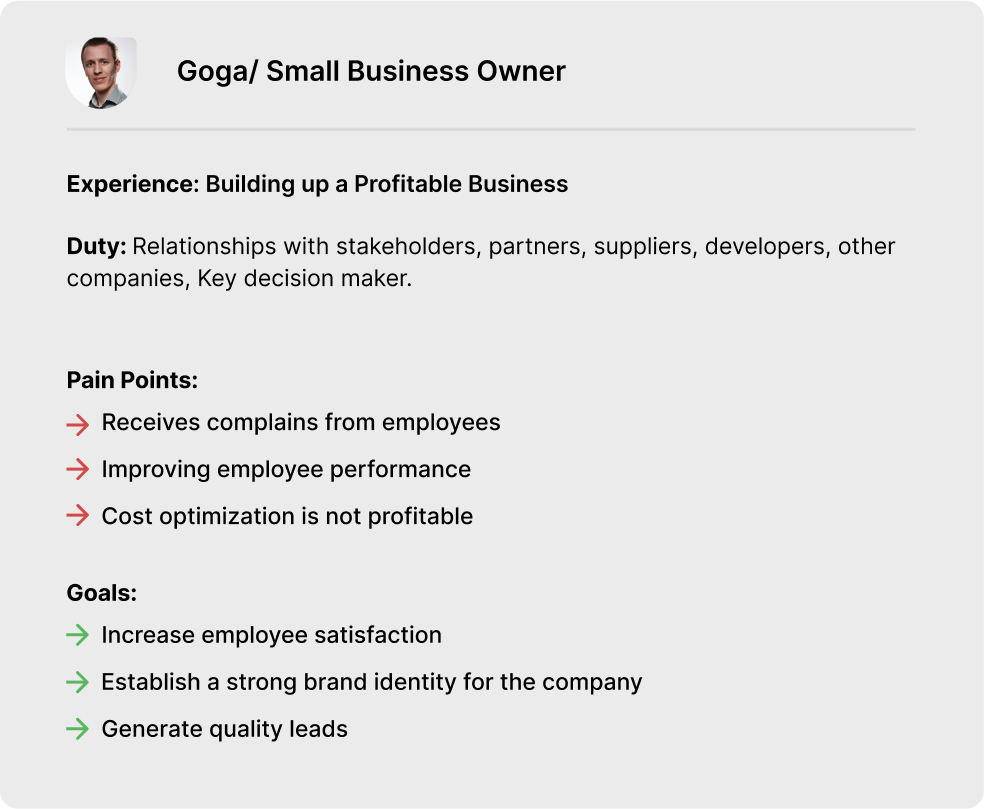
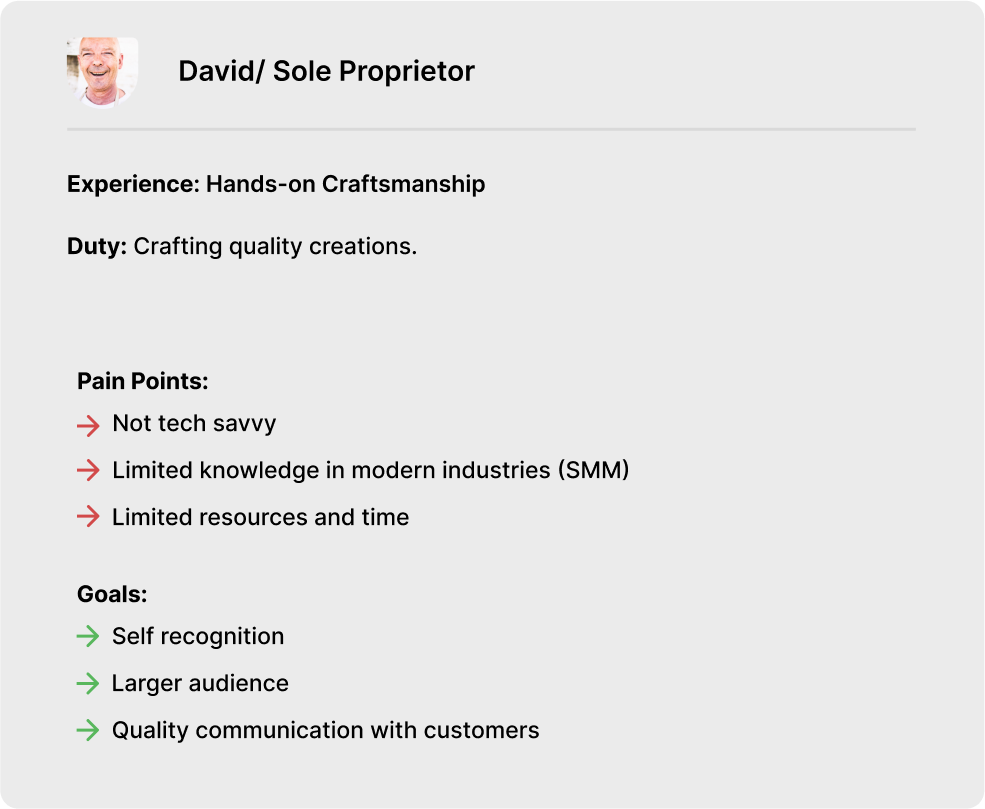
The first persona, Keti, serves as an office manager within diverse settings such as a beauty salon, boutique hotel, aesthetic center, clothing store, dental clinic, construction company, and more. A youthful individual under 30, Keti maintains an active presence across various social platforms. In addition to her primary administrative responsibilities aimed at ensuring the company's seamless operation, she also takes on the pivotal role of managing the organization's social media channels. The second persona, Goga, embodies the buyer persona. He assumes the role of Keti's superior, overseeing a company with a maximum of 10 employees. In an effort to optimize costs associated with a professional social media manager, Goga strategically designates the additional responsibility of a social media manager to his employees, thereby redistributing the duty among the workforce. David, aged between 45 and 60, is a self-employed individual. Despite lacking a strong familiarity with technology and struggling with navigating platforms like Facebook, David possesses commendable expertise in hands-on craftsmanship. His skills may encompass various domains, including woodworking, metalworking, and clothes tailoring. In his company, he operates as a sole proprietor, effectively managing and handling all responsibilities on his own.

Jobs to be done

Collaborating with the stakeholders, we engaged in extensive discussions about the personas, delving into their pain points and the specific tasks they needed to accomplish. We conducted a comprehensive analysis of our competitors, evaluating their strengths and weaknesses, and identified the gaps in the market that needed to be addressed to better serve our customers.

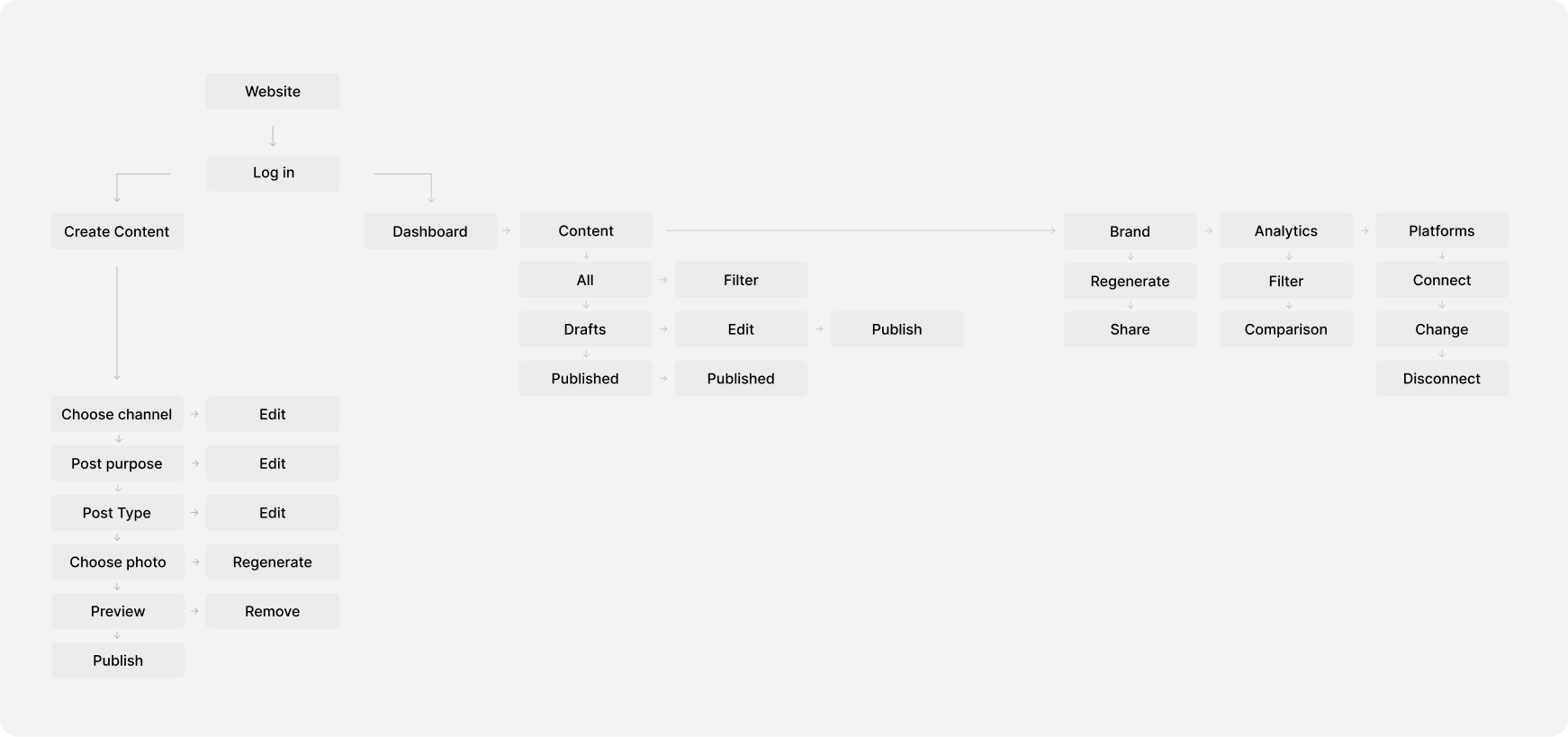
User Story Map

Despite the extensive discussions and iterative updates throughout the project, the core structure and flow of the initial Story Map remained largely unchanged. We made minor adjustments and refinements, but the overall roadmap remained consistent and provided a solid foundation for our work. (We removed certain details from the "Brand info" section, such as tone of voice and audience, because we assumed that our customers might not be very familiar with those terms. In order to simplify the process for them, we made the decision to let AI determine these aspects instead. Hereby I am showcasing the story map of a registered user.
Our Hypothesis

The idea is to offer simplicity to non-professionals while delivering professional-level content. As a content creation solution, AI is merely a tool we use to achieve these results. We communicate with our customers and users in their language, catering to beginners and non-professionals, helping them achieve outstanding outcomes with minimal effort. By removing embarrassment, stress, and feelings of being overwhelmed, we empower our users and inspire confidence in their creative endeavours.

The feedback provided by the client:

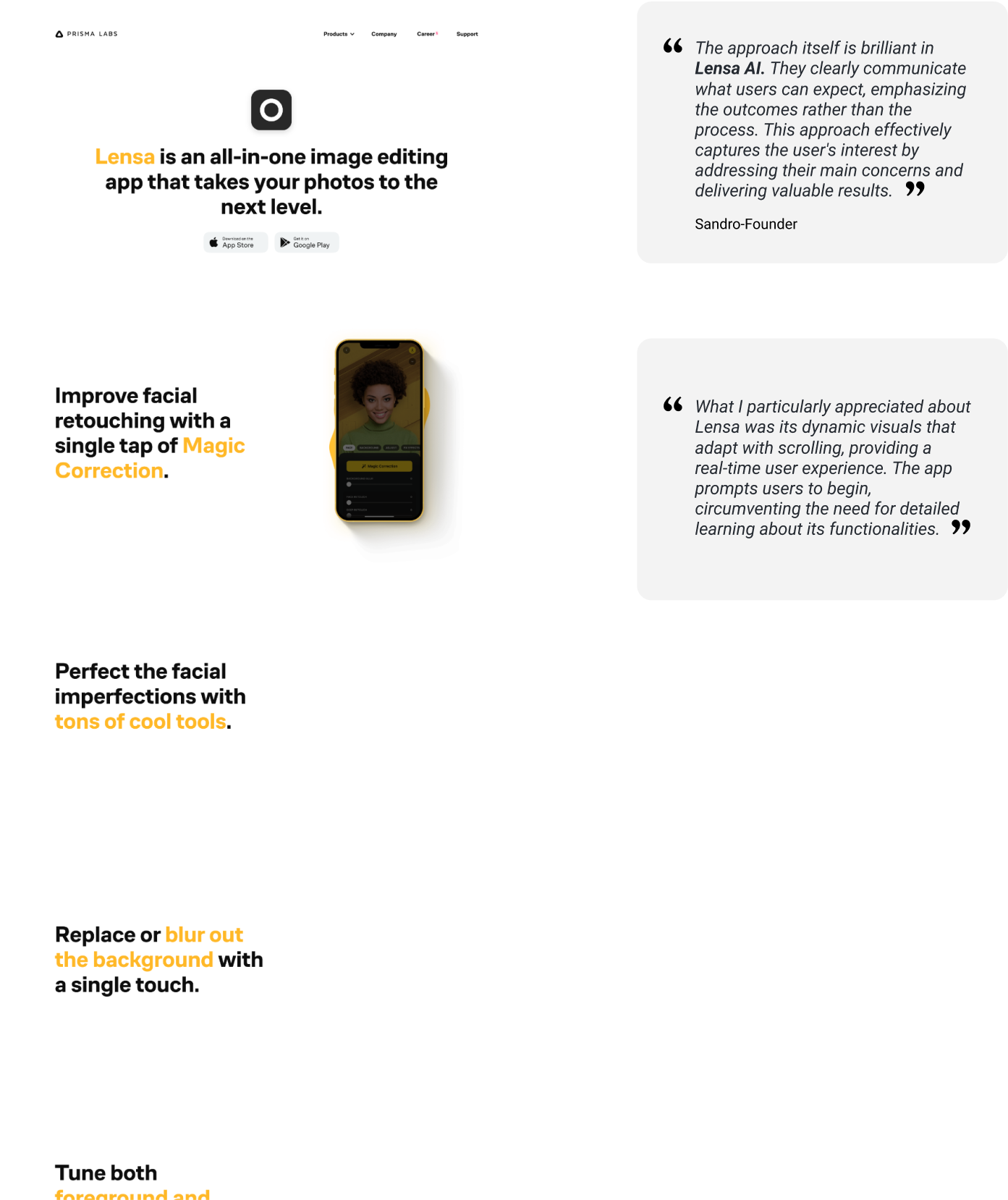
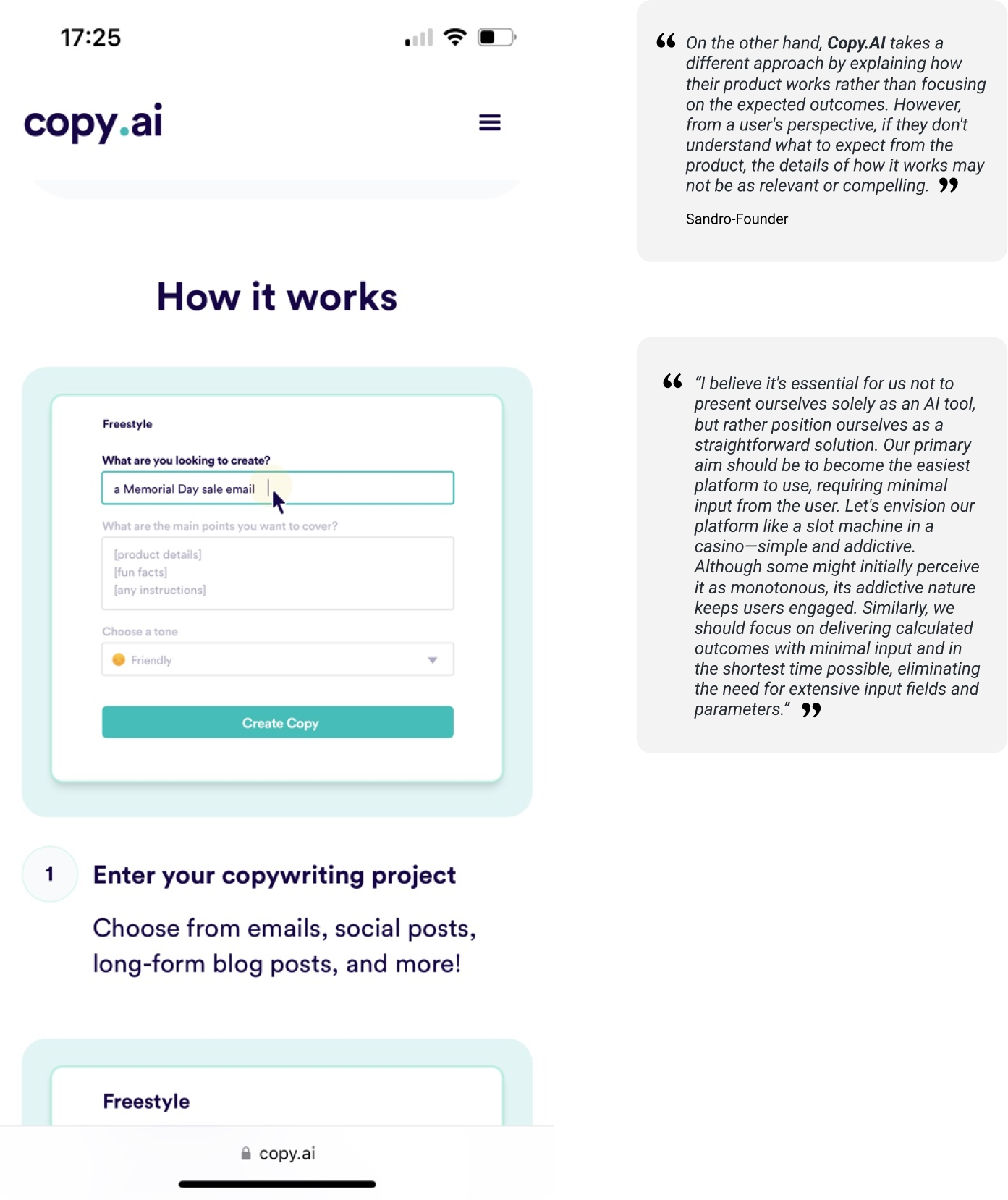
It turns out that we prioritize a mobile-first approach. Our users are not inclined to read lengthy content, so we aim to create a visually engaging experience that quickly captures their attention and conveys information efficiently. As for the examples provided, such as https://www.jasper.ai/, https://www.copy.ai/, and https://www.copyshark.ai/, we found them to be overwhelming with excessive information and text on their homepages, which does not align with our user's preferences.
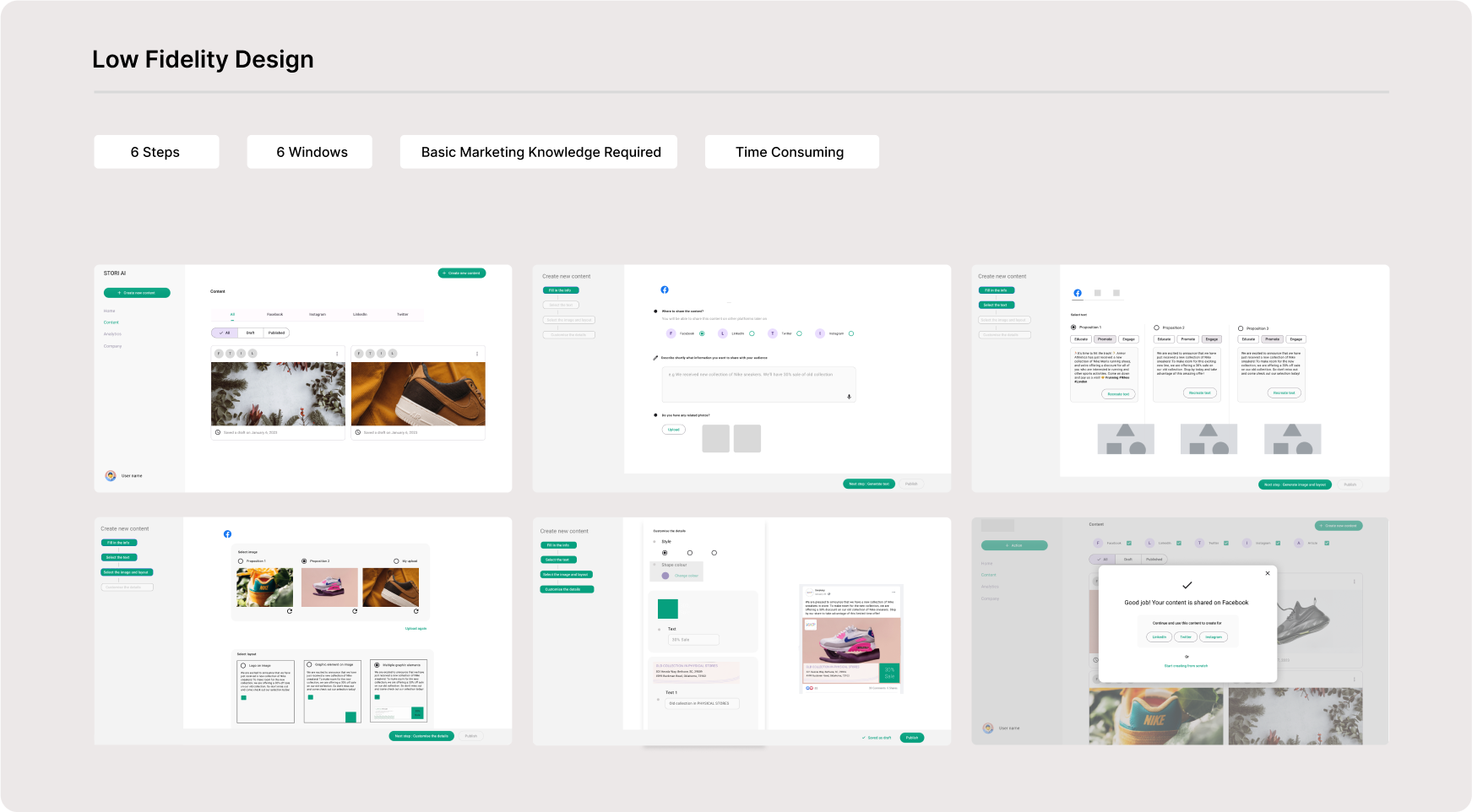
Low Fidelity Design

After preparing low-fidelity designs, we were ready to conduct design testing. We had a total of 6 personas to test, and all of them perfectly represented the personas we created.

Insight 1

To ensure efficient multi-platform content creation, the platform should allow users to adapt their posts for specific channels without the need for separate content creation. The AI-driven solution should seamlessly generate content for various platforms in the background, providing users with the ability to preview and customize the content before sharing.

Insight 2

Giving a lot of choices to a person makes it more confusing.(referencing Canva).Canva's user flow involves selecting a niche, filtering options, and spending significant time choosing from numerous versions. Users then proceed to modify and adjust multiple desired versions, often resulting in dissatisfaction. In contrast, Stori sets itself apart by providing direct choices without templates, allowing users to make informed decisions more efficiently.
Testing 02
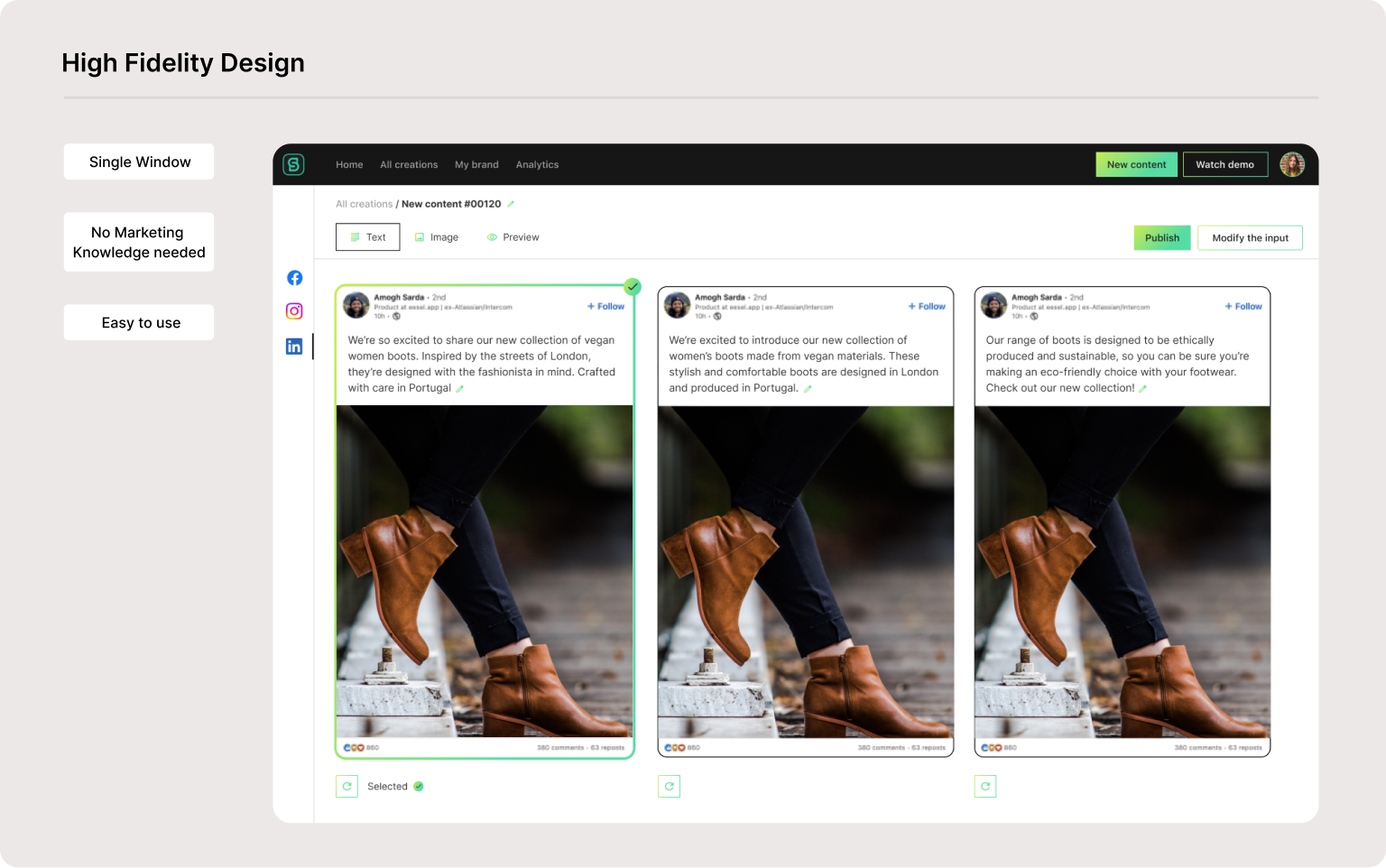
The testing results highlighted the need for further simplification of the process. As a result, we made the decision to remove certain features related to posts' content categories such as "educational" and "promotional." Originally, the content creation steps were spread across different windows, which required the user to perform multiple actions, like clicking for ‘photo generation’, providing copy for a post, and accessing other features separately. Based on the testing feedback, we decided to consolidate all these steps onto one screen. This redesign allowed for a seamless flow, enabling users to provide input, edit, create content, and publish all in one place, streamlining the user experience and enhancing usability.

What I would do in a different way

I spent a lot of time researching and developing personas. When the business model was untested and not market-validated, the founder himself wasn't sure how well he had defined the personas and product features. Therefore, it was possible to move to prototyping more quickly and prepare the design directly. The finished MVP design had to go through several months of testing, instead of thinking about personas too much. Only this would better define the product and its benefits.

Conclusion

Unlike the initial design, many features have undergone changes before reaching the final version. The client's perspectives on the product and marketing have also evolved throughout the process, leading them to adopt a different positioning strategy. Overall the client was happy with the professionalism delivered. Later on the product got the award of N1 product of the day on Product Hunt.